

UNDERSTAND
Explore the broader influences on your health.
When you're navigating cancer, the questions can extend far beyond treatment.
What might become clearer if we explored your health not as a collection of separate problems, but as an interconnected picture shaped by your history, experiences and the way you live?

A cancer diagnosis can change the way you see your health, your future and the choices you make every day.
You may have questions you never imagined having to ask.
What can I do? What should I believe? Am I overlooking something important?
Perhaps you've recently received a diagnosis and are trying to understand what comes next.
Perhaps you're undergoing treatment and wondering how to support your overall health.
Or perhaps treatment has ended, and you're looking beyond your next medical appointment.
You may have encountered countless recommendations about nutrition, exercise, supplements, sleep, stress, emotional well-being and complementary approaches.
Some sound convincing. Others contradict each other.
There is no shortage of health information. But understanding which information is reliable, relevant and meaningful for you can be another matter entirely.
You don't have to make sense of it all alone.
What if you didn't need more information—but a better way to make sense of it?
Your health isn't made up of isolated pieces.
Your medical history, physical health, lifestyle, environment and emotional well-being can influence one another in complex ways.
Looking at these connections may reveal questions worth exploring and opportunities to support your overall health.
But seeing the bigger picture doesn't mean trying to address everything at once.
Not everything that influences health deserves equal attention.
The challenge is understanding which factors are relevant to your circumstances, what the evidence supports and where to focus your efforts.
Sometimes a different perspective can change the questions you ask.
And better questions can lead to more informed choices.
A whole-person methodology grounded in curiosity, scientific discernment and personalized guidance.
Omnisystemics™ begins with a simple principle:
To understand what matters, we first need to see the broader picture.
Rather than starting with a predetermined protocol, we begin with you—your history, your concerns, your goals and the questions you want answered.
Our approach follows three guiding principles:
Explore the broader influences on your health.


Identify what is relevant, meaningful and worth your attention.


Develop a way forward that reflects your circumstances and goals.
A 360° perspective doesn't mean doing 360 things.
It means seeing enough of the picture to make better-informed decisions about what matters most.
The exploration doesn't end with information. We work toward identifying realistic priorities and translating them into a personalized health plan you can put into practice.
Omnisystemics™ complements your medical care. It does not replace cancer treatment, medical surveillance or the expertise of your healthcare team.
Discover Omnisystemics™ →From understanding the bigger picture to creating your personal plan.
Every person's health story is different. Working together begins with understanding yours—your health history, current concerns, priorities, and what matters most to you.
Using the Omnisystemics™ approach, we'll explore the connections that may be relevant to your well-being, identify meaningful priorities, and develop practical steps that fit your individual circumstances.
You'll receive a personalized written health plan that brings together your priorities and agreed-upon actions, giving you a clear reference as you move forward—while continuing to work in partnership with your healthcare team.
My background in pharmacology, clinical research, supporting people navigating a cancer diagnosis, and whole-person health has taught me to appreciate both the value of scientific evidence and the complexity of individual health.
But working with people affected by cancer has also shown me something that research papers alone cannot convey: the uncertainty, difficult decisions and emotional weight that can accompany a diagnosis.
I believe people deserve more than another collection of health recommendations.
They deserve to be heard, to understand their options and to participate meaningfully in decisions about their health.
That's why I developed Omnisystemics™—to bring scientific inquiry and whole-person thinking together in an individualized approach that also helps translate information into practical priorities.
Because behind every diagnosis is a person whose individual circumstances, questions and priorities matter.
Sometimes the most useful discoveries begin when we question what we've been told—or what we've come to assume.
Through educational webinars, I invite you to explore questions about health, examine scientific evidence and consider perspectives you may not have encountered before.
We'll distinguish established knowledge from emerging research, explore why individual circumstances matter and examine what it means to take an informed, active role in your health.
Not another overwhelming list of things you should be doing.
An opportunity to understand more—and ask better questions.
Educational webinars are being planned. Join the mailing list to hear when dates and registration details are available.
5 Questions That Could Change the Way You Think About Your Health After a Cancer Diagnosis
What if some of the most useful questions about your health are the ones you haven't yet considered?
Discover five thought-provoking questions that invite you to look beyond the usual recommendations, explore new perspectives, and begin identifying what matters most to you.
Explore the Complimentary Guide →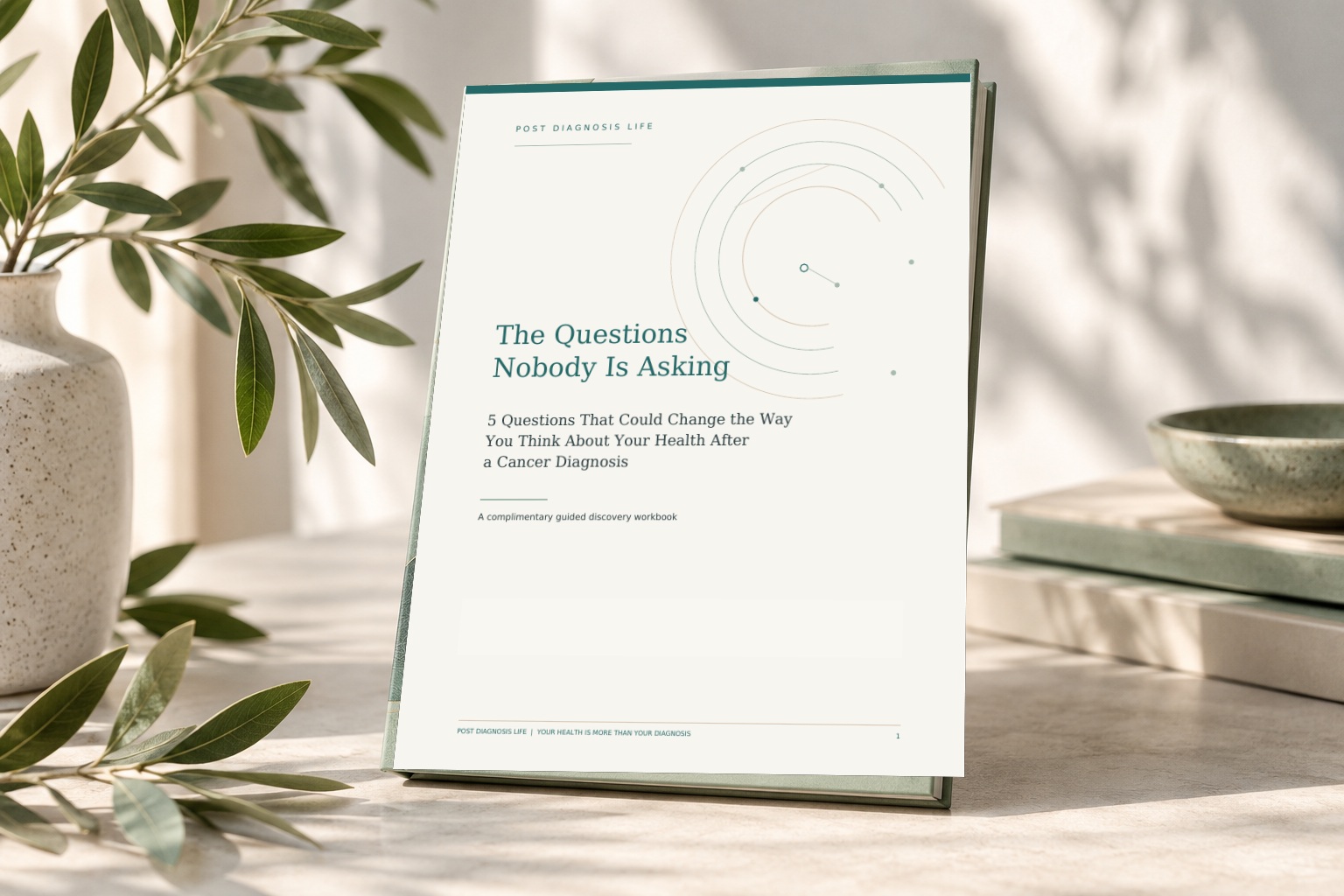
Perhaps you're looking for a clearer understanding of your health.
Perhaps you're trying to make sense of conflicting advice.
Or perhaps you're ready to explore how a more personalized, whole-person approach could support you.
An introductory conversation is an opportunity for us to meet, discuss your concerns and goals, and explore if working together would be a good fit.
You don't need to arrive with all the answers.
You only need to be willing to begin the conversation.
You can't control everything.
But you can take an active role in what comes next.
You are not powerless.